
Tomb of Annihilation Disclaimer Explained in Simple Words: What Players Should Know Before Starting

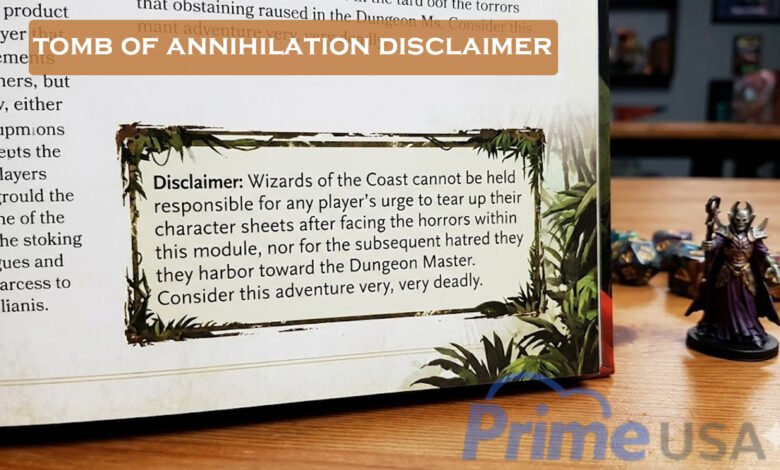
If you are new to Dungeons and Dragons or you just picked up the Tomb of Annihilation adventure book, you may have noticed something unusual at the beginning. There is a short disclaimer printed right there before the story even starts. It does not look like a legal warning or a boring company message. It is actually part of the game itself, and understanding it will help you enjoy the adventure much more.
In this article, we are going to talk about what that disclaimer says, why it exists, what it means for players and Dungeon Masters, and how it fits into the bigger picture of this famous D&D campaign. Whether you are a beginner or someone who has played a few campaigns before, this guide will explain everything in a simple and friendly way.
What Is Tomb of Annihilation?
Before we get into the disclaimer, let us quickly talk about what Tomb of Annihilation actually is.
Tomb of Annihilation is an official adventure module for Dungeons and Dragons 5th Edition. It was published by Wizards of the Coast in September 2017. The story takes players to a jungle land called Chult, where a terrible curse called the Death Curse is slowly killing people all over the world. Anyone who has ever been brought back from the dead is now dying again, and new resurrection spells no longer work.
The adventure is known for being very challenging. It includes a massive dungeon called the Tomb of the Nine Gods, which is full of deadly traps, hard puzzles, and dangerous monsters. Players can lose their characters permanently in this campaign, which makes it different from many other D&D adventures.
The Disclaimer: What Does It Actually Say?
Here is the disclaimer that appears at the beginning of the Tomb of Annihilation book. It reads:
“Not for the faint of heart, Tomb of Annihilation is a harrowing adventure that will challenge even experienced players. Characters will face dangers of the highest order, and their fates are not guaranteed. Player characters can die, and that death might be permanent.”
This is a warning written in a fun and dramatic way. It is telling players upfront that this is a hard adventure. Your characters might die. And when they die in this campaign, they might stay dead because of the Death Curse storyline.
Some editions and promotional materials also include language that points directly to the deadly nature of the dungeon, comparing it to classic old-school D&D adventures where player death was common and expected.
Why Did Wizards of the Coast Include a Disclaimer?
This is a great question, and the answer has a few layers to it.
1. It Sets Honest Expectations
Modern D&D is often played in a style where characters rarely die permanently. Groups use house rules, Dungeon Masters sometimes bend the story to save beloved characters, and resurrection spells are easy to find. Many new players come into the game expecting this kind of experience.
Tomb of Annihilation is different. The whole point of the Death Curse is that resurrection does not work. If your character dies, they are gone. The disclaimer is there to make sure players know this before they start. Nobody likes a surprise that ruins their fun.
2. It Pays Respect to Old-School D&D
When D&D was first created in the 1970s and 1980s, it was much harder. Players expected to lose characters. Famous old adventures like the original Tomb of Horrors by Gary Gygax were incredibly deadly. Tomb of Annihilation is inspired by that tradition. The disclaimer is a nod to that history, telling experienced players that this adventure goes back to those roots.
3. It Creates Atmosphere and Drama
The disclaimer also works as a storytelling tool. Even before you read a single word of the adventure, you already feel a little nervous. That nervousness is part of the experience. The Dungeon Master and players are all aware that this campaign is serious, and that feeling carries through the whole game.
4. It Encourages a Different Kind of Play
When players know that death is permanent and real, they tend to play differently. They think more carefully. They take fewer unnecessary risks. They talk to each other more before making big decisions. The disclaimer pushes players toward a more careful and strategic style of play, which fits perfectly with the Tomb of Annihilation setting.
What Does “Permanent Death” Mean in This Campaign?
In most D&D campaigns, when a character dies, someone can cast a spell like Raise Dead or Resurrection to bring them back. It costs money and materials, but it is usually possible.
In Tomb of Annihilation, this does not work because of the Death Curse. The Death Curse is caused by a powerful artifact called the Soulmonger, which is trapping the souls of the dead. When a character dies, their soul gets trapped and cannot come back.
This means:
- Resurrection spells fail during this campaign.
- Characters who were previously brought back to life begin losing hit points every day.
- Once a character dies, they are truly gone unless the players find a way to stop the Death Curse.
This is exactly what the disclaimer is warning you about. It is not just flavor text. It is a real game mechanic that will affect how you play.
How Should Players Respond to This Disclaimer?
Reading the disclaimer should do a few things for you as a player.
First, it should make you feel excited. This is a real challenge. Not every D&D adventure gives you this kind of stakes. If you enjoy games where your choices truly matter and where failure is possible, this is exactly the kind of adventure you want.
Second, it should make you think about your character differently. In many campaigns, players write long detailed backstories for their characters and get very attached to them. That is fine, but in Tomb of Annihilation, you might want to hold on a little more loosely. Some experienced players in this campaign actually prepare a “backup character” just in case their main character dies.
Third, it should encourage you to talk to your group. Before starting Tomb of Annihilation, it is a good idea for everyone at the table to agree on the tone. Is your group okay with permanent character death? Are you all ready for a tough dungeon? Having that conversation before the first session makes everything smoother.
What Should the Dungeon Master Know?
If you are running Tomb of Annihilation as the Dungeon Master, the disclaimer is especially important for you to take seriously.
Be Honest With Your Players
Show your players the disclaimer. Talk about it openly. Make sure everyone understands what kind of campaign this is going to be. This is called a “session zero” in D&D terms, where the group meets before the first game session to discuss expectations.
Do Not Soften It Too Much
It can be tempting to protect your players from character death because you know how attached they are to their characters. But if you do this too much, you take away the very thing that makes this campaign special. The danger is the point. Trust your players to handle it.
Reward Careful Play
Because the campaign is so deadly, Dungeon Masters should look for ways to reward players who think creatively and play carefully. If your players find a clever way around a trap or avoid a dangerous fight by talking to a monster instead of fighting it, that is worth celebrating.
Prepare for Character Deaths
They will happen. Have a plan for how to introduce new characters when old ones die. Make it feel like a natural part of the story rather than a punishment.
Is Tomb of Annihilation Suitable for New Players?
This is a question that comes up a lot, and the honest answer is: it depends.
If you are completely new to D&D and have never played any campaign before, Tomb of Annihilation might be a difficult starting point. Learning the rules while also dealing with the extra pressure of permanent death can feel overwhelming.
However, if you are new but you have an experienced Dungeon Master who can guide you through the rules, and if your group is enthusiastic and supportive, then it is absolutely possible to enjoy this campaign as a beginner. Just go in with open eyes and remember what the disclaimer says.
For players who have already done a smaller adventure like Lost Mine of Phandelver or a few shorter encounters, Tomb of Annihilation is a fantastic next step. It will push you and challenge you in ways that easier campaigns cannot.
The Disclaimer in the Context of D&D History
To really understand why the disclaimer matters, it helps to know a little bit of D&D history.
D&D was invented in 1974 by Gary Gygax and Dave Arneson. In those early years, the game was very different from what we know today. Characters were simpler, combat was brutal, and player character death was expected. Players often had multiple characters ready to go because they assumed some would die.
As D&D evolved through different editions, it generally became more story-focused and less deadly. Players started building complex characters with rich backstories, and the game moved toward collaborative storytelling rather than pure survival.
The Tomb of Annihilation disclaimer is a return to those older values, at least for this one campaign. It says: for this adventure, we are going back to the roots. Survival is not guaranteed. Be ready.
This is also why long-time D&D fans were so excited about Tomb of Annihilation when it came out. It offered something that many modern campaigns do not: real stakes.
Frequently Asked Questions
1. What exactly does the Tomb of Annihilation disclaimer say?
The disclaimer warns players that this is a very challenging adventure where characters can die and that death may be permanent due to the Death Curse mechanic in the story. It is designed to set expectations before the campaign begins.
2. Is the disclaimer just for fun, or does it mean something for gameplay?
It means something real for gameplay. Because of the Death Curse, resurrection spells do not work during the campaign. Character death is a genuine risk that affects how the game is played.
3. Can my character still die in Tomb of Annihilation?
Yes, absolutely. In fact, the campaign is designed to be more deadly than most D&D adventures. The disclaimer is there specifically to remind you of this.
4. What is the Death Curse in Tomb of Annihilation?
The Death Curse is a magical plague that affects the whole world. It stops resurrection magic from working and slowly kills anyone who has been brought back from the dead in the past. Stopping the Death Curse is the main goal of the campaign.
5. Should beginners play Tomb of Annihilation?
It is possible but challenging. If you are a complete beginner, it may be better to start with an easier adventure first. However, if you have an experienced DM and a supportive group, beginners can enjoy it too.
Final Thoughts
The Tomb of Annihilation disclaimer is more than just a warning. It is a promise. It promises players a real challenge, genuine stakes, and an adventure that respects the long history of Dungeons and Dragons. When you read it, you know you are about to do something different.
For groups that are ready for it, Tomb of Annihilation is one of the most exciting and memorable campaigns in modern D&D. The danger is real, the story is gripping, and every decision matters. That is exactly what a great adventure should feel like.
So read the disclaimer, talk to your group, prepare your backup character, and dive in. Chult is waiting for you, and the Death Curse will not lift itself.Share
Also see PrimeUsa For more Amazing Informations.